Worldox End-of-Support 2026: What Law Firms Should Do Before the Deadline
For many law firms, document management systems are not just operational tools. They are deeply embedded into the way attorneys, staff, and administrators manage daily legal work. From client-matter organization and email filing to document retrieval and compliance workflows, these systems quietly support nearly every part of legal operations.
That is why the approaching Worldox end-of-support deadline has become an important topic across the legal technology space.
Worldox on-premise support is scheduled to end on December 31, 2026, leaving many firms evaluating what comes next and how quickly they need to begin planning a transition strategy. While some firms may decide to move toward cloud-native platforms, others are looking more carefully at deployment flexibility, infrastructure control, long-term costs, and how to preserve years of established document structures during migration.
As law firms prepare for the Worldox end-of-support deadline, Docsvault has expanded its migration support and structured transition resources to help firms plan smoother document management transitions.
The announcement reflects a growing concern among firms that want to modernize their document management environment without disrupting familiar workflows or forcing rushed infrastructure decisions.
Why the Worldox End-of-Support Deadline Matters
Legal document management systems are significantly more complex than standard file storage platforms. Over time, firms build entire operational structures around them, including folder hierarchies, matter-based filing systems, retention policies, metadata standards, Outlook integrations, and internal access permissions.
As a result, replacing or migrating a DMS is rarely a simple software upgrade.
For firms that have relied on Worldox for years, the end-of-support timeline introduces several practical concerns. Continuing to operate unsupported software can eventually create operational and security risks, while rushed migrations often lead to workflow disruption, inconsistent data organization, and user frustration.
At the same time, many firms are realizing that the migration process itself requires far more planning than expected. Reviewing repository structures, cleaning legacy data, validating metadata, and testing workflows can take months depending on the size and complexity of the environment.
This is why many firms have started evaluating migration options well ahead of the 2026 deadline instead of waiting until support timelines become urgent.
Why Some Law Firms Are Re-Evaluating Cloud-Only Platforms
Over the past several years, much of the legal technology industry has shifted toward cloud-first deployment models. While cloud infrastructure offers advantages for many organizations, not every law firm wants to move entirely away from on-premise environments.
For some firms, the concern is operational flexibility. Others are focused on long-term subscription costs, compliance requirements, internal IT policies, or maintaining greater control over sensitive client information.
In many cases, firms are not necessarily opposed to cloud technology itself. Instead, they want the ability to choose the deployment model that best aligns with their operational and security requirements rather than being forced into a single infrastructure approach.
This shift in evaluation criteria has made deployment flexibility increasingly important during DMS selection and migration planning.
Firms are now asking broader strategic questions, such as:
- Will we still control how and where our data is stored?
- Can existing workflows remain intact after migration?
- How disruptive will user retraining be?
- What happens to years of matter-based organization?
- Will pricing remain predictable as repositories grow?
These are no longer secondary considerations. For many legal teams, they have become central to long-term technology planning.
The Biggest Mistake Firms Can Make: Waiting Too Long
One of the most common misconceptions around document management migration is the assumption that firms can postpone planning until closer to the support deadline.
In reality, successful migrations typically involve several stages long before deployment begins. Firms often need time to review legacy repositories, remove outdated data, standardize metadata, validate permissions, and test search performance across different departments.
The larger the repository, the more critical this preparation becomes.
Waiting too long can compress implementation timelines and force firms into rushed vendor decisions. It can also increase operational pressure on both IT teams and end users, especially when attorneys are expected to adapt to new systems with limited preparation or workflow testing.
Starting earlier creates more flexibility. It allows firms to evaluate solutions strategically, perform gradual user training, and preserve organizational continuity throughout the migration process.
For firms managing years of legal documents and matter-centric filing systems, that additional planning time can make a substantial difference.
What Law Firms Need to Preserve During Migration
One of the biggest concerns firms have during a DMS transition is whether they will lose the organizational structure they have built over time.
For many firms, that structure represents years of operational knowledge embedded into client-matter hierarchies, metadata relationships, email filing associations, version histories, and internal workflows.
A poorly planned migration can disrupt those systems and create unnecessary friction for attorneys and staff who rely on fast, familiar access to documents every day.
This is one reason structured migration planning has become such an important part of the conversation around the Worldox end-of-support timeline.
Rather than simply moving files from one system to another, firms are increasingly focused on preserving the integrity of their existing environment while improving accessibility, search capabilities, and long-term scalability.
Law firms evaluating their next steps can explore Docsvault’s Worldox migration approach here.
Firms interested in reviewing migration workflows and deployment options can also schedule a migration assessment here
How Docsvault Supports Structured Worldox Transitions
Docsvault’s migration initiative is designed specifically to help firms transition from Worldox while maintaining operational continuity and reducing disruption during implementation.
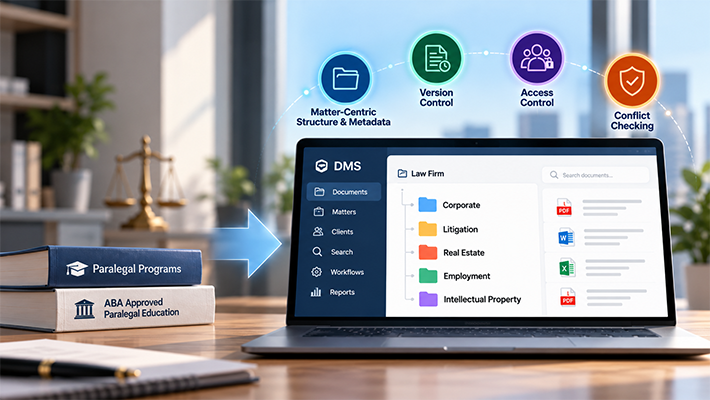
The platform supports legal document management workflows that many firms already depend on, including matter-centric organization, Outlook integration, full-text search, audit trails, retention management, version control, and secure remote access.
More importantly, the migration process itself focuses on preserving existing structures wherever possible. That includes client-matter hierarchies, folder organization, metadata relationships, and historical document accessibility.
For firms concerned about rebuilding years of organizational logic from scratch, that continuity can significantly reduce migration complexity and improve user adoption after deployment.
The broader goal is not simply replacing one document management platform with another. It is helping firms modernize their environment without sacrificing the workflows and structures that already support day-to-day legal operations.
Questions Firms Should Ask Before Choosing a Post-Worldox DMS
As firms evaluate alternatives ahead of the support deadline, the conversation should extend beyond features alone.
Deployment flexibility, migration support, operational continuity, search performance, Outlook integration, compliance capabilities, and long-term pricing models all play an important role in determining whether a transition will remain sustainable over time.
Equally important is understanding how much migration assistance a vendor provides during planning and implementation.
Many firms discover that the quality of migration support has as much impact on long-term success as the software itself.
The most successful transitions are usually the result of careful planning, gradual implementation, and preserving the workflows attorneys already rely on rather than forcing abrupt operational changes.
Frequently Asked Questions
Worldox on-premise support is scheduled to end on December 31, 2026.
Early planning gives firms time to review repositories, validate metadata, preserve workflows, train users gradually, and avoid rushed implementation timelines.
Yes. Some legal document management platforms continue to support both on-premise and private cloud deployment models.
Important elements typically include client-matter structures, metadata, folder hierarchies, email filing relationships, permissions, and version histories.
Most firms complete migration in a matter of weeks. Timeline depends on data volume and configuration complexity — our team assesses this upfront so there are no surprises.
Final Thoughts
The Worldox end-of-support deadline is creating an important decision point for many law firms.
Some organizations may decide to fully embrace cloud-native infrastructure, while others will continue prioritizing deployment flexibility, operational control, and structured migration planning.
What matters most is starting the evaluation process early enough to make informed decisions instead of reactive ones.
For firms that have spent years building organized legal repositories and established workflows, the transition away from Worldox is not just about replacing software. It is about protecting operational continuity while preparing for the future.
As the December 2026 deadline approaches, firms that begin planning now will have the greatest flexibility to evaluate options carefully, preserve existing structures, and transition on their own timeline.